
You do not need a reservation for every meal to eat well in Istanbul. Give yourself a few different experiences: breakfast with time to sit, something simple between sights and one evening when dinner is the main event. Staying in the neighbourhood you are already exploring usually makes more sense than crossing the city for a snack you saw on a screen.
Two kebab stops to build lunch around
Try Bayramoğlu Döner in Kavacık for wood-fired döner, or Şehzade Cağ Kebap in Sirkeci for horizontal-spit lamb served on skewers. The first is a dedicated outing on the Asian side; the second fits between the old city’s sights. Our döner and cağ kebab guide has the dishes, full addresses, restaurant photo and map links.
Breakfast: a spread or something to carry
Kahvaltı can mean a leisurely table of cheeses, olives, tomatoes, bread, eggs and sweet accompaniments. Menemen is the tomato-and-pepper egg dish you will often see on breakfast menus. If you order a sharing breakfast, ask how many people it serves and whether eggs, tea and extra bread are included. A spread for two is not necessarily priced as one order.
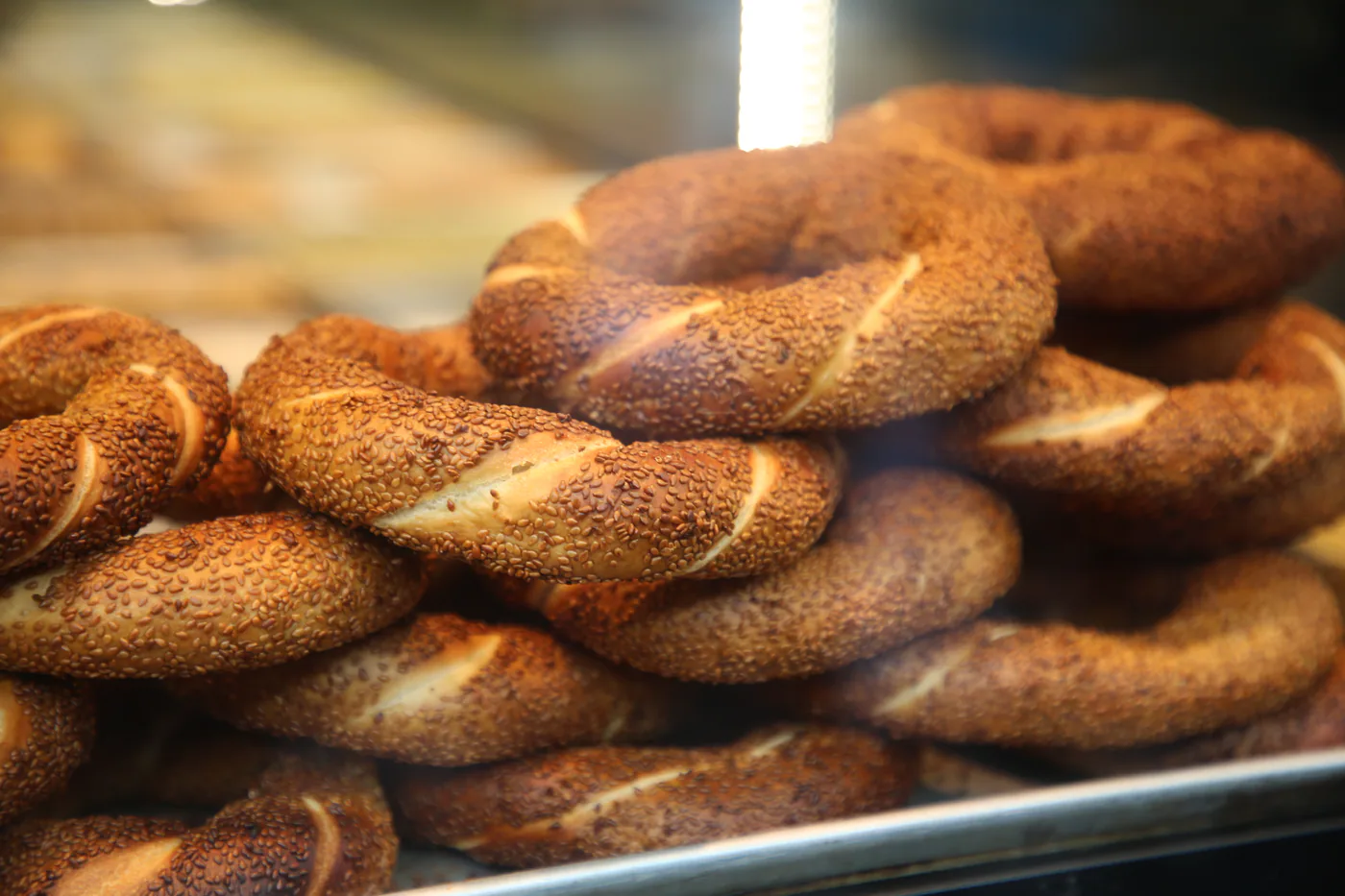
For a lighter start, look for simit, the sesame-coated bread ring, or börek, layered pastry with fillings such as cheese, spinach or meat. Ask which filling is which before pointing at a tray. GoTürkiye’s breakfast guide gives a useful introduction to the range of dishes. Our preference for a sightseeing morning is simple: eat enough to enjoy the first stop without turning breakfast into a second itinerary.
An easy lunch: find a lokanta
A lokanta is a useful place to look for cooked dishes rather than another takeaway. An esnaf lokantası traditionally serves the working lunch crowd. Seeing food at a counter can help when you do not recognise the names; ask about the dish, portion and price before choosing. GoTürkiye’s Turkish cuisine introduction explains this home-style restaurant tradition.
Try making lunch the pause between two nearby visits. After Süleymaniye, stay around the old city’s market streets. In Kadıköy, browse the food market before deciding where to sit. If a restaurant displays several dishes, you can ask whether smaller portions are available instead of assuming you must order a full plate of everything.
Street-food names worth knowing
Balık ekmek is a fish sandwich, often served with onion and greens. Tavuklu pilav is chicken with rice. Kestane means chestnuts, while mısır means corn. These names, along with simit and börek, are a useful starting point for understanding the city’s street food.
At a busy stand, establish whether the price is per piece, portion or weight. Pointing at a display is not always an unambiguous order. Choose somewhere you feel comfortable asking questions and seeing how your food is prepared; popularity on a video is not a substitute for that judgement.
Three neighbourhood food outings
Eminönü: start at the Spice Bazaar, look through the surrounding shopping streets and finish near the waterfront. Buy small quantities if you are still discovering what you like. Keep a café or seated lunch in the plan so the whole outing is not spent standing in a crowd.
Kadıköy: arrive by ferry, wander the market streets and choose lunch before continuing towards Moda. This is an easy way to make eating part of a neighbourhood day. Our Kadıköy guide connects the market, harbour and waterfront without sending you back and forth across the city.
Beyoğlu: combine galleries or side streets with dinner. A meyhane is associated with meze, drinks and a sociable meal, as the GoTürkiye meyhane guide explains. Ask about a set menu versus individual dishes, and whether music or a minimum spend affects your chosen table. You can enjoy a long dinner without ordering every plate offered.
Tea, coffee and a small sweet finish
Çay is tea. Türk kahvesi is Turkish coffee, brewed with finely ground coffee that settles in the cup. Ask for the sweetness you prefer when ordering; take small sips and leave the grounds at the bottom. GoTürkiye’s coffee guide covers the tradition behind the familiar small cup.
For sweets, sharing a few pieces is a good way to try something new without committing to a large box. Ask about nuts, dairy and other ingredients if they matter to you. A dish that looks vegetable-based may still contain butter, stock or yoghurt, so explain dietary needs clearly rather than relying on its appearance.
Buying food to take home
Ask to see the weight and final price before a purchase is packed. For gifts, get an ingredient label and storage advice, and check the destination country’s rules before taking food across a border. A small sealed packet you know you will use is often a better souvenir than a large assortment bought in a hurry.