
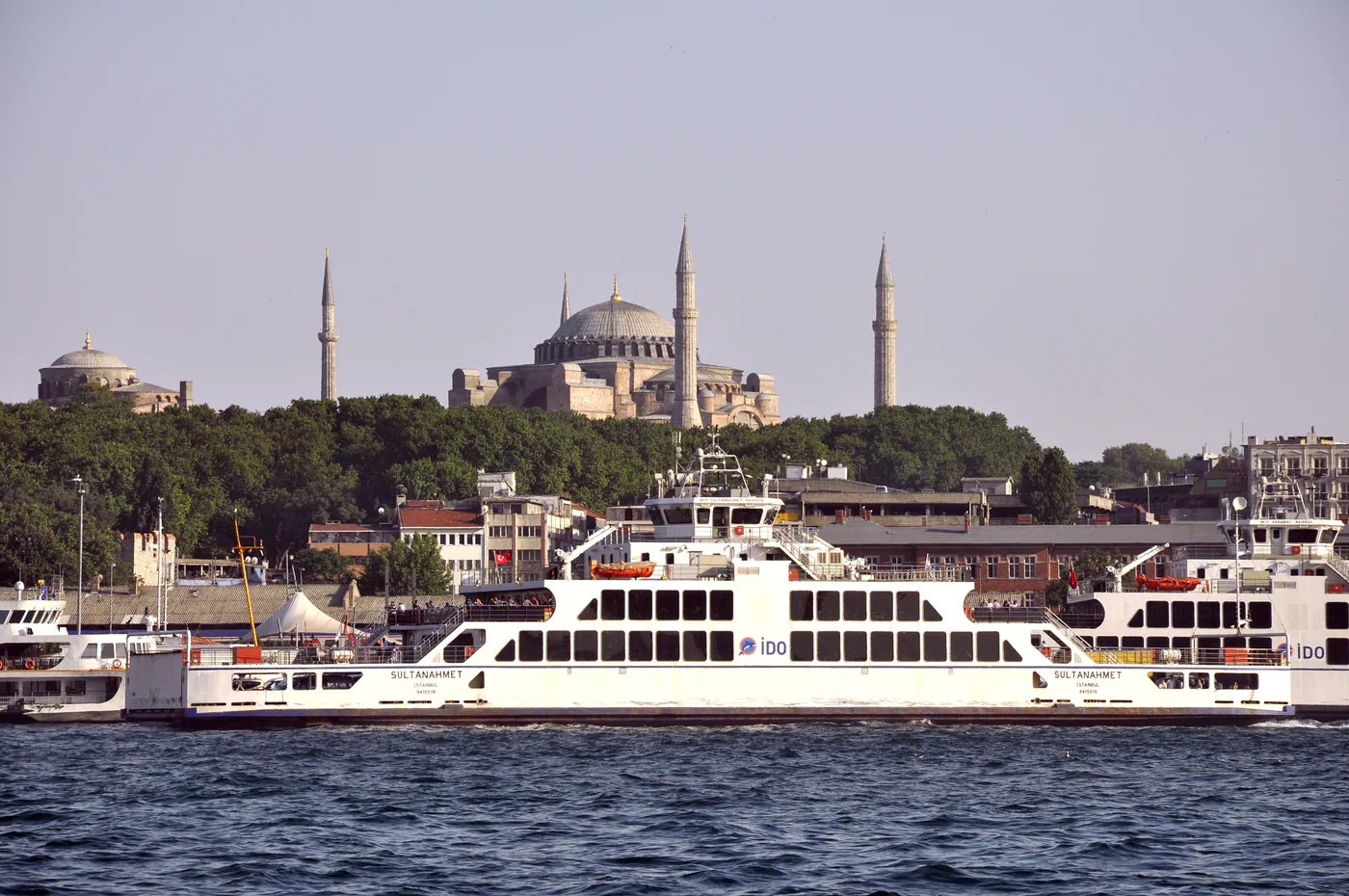
The best transport plan in Istanbul starts with geography. Group a day’s sights on one side of the water or in neighbouring districts, then use a ferry or rail connection when it adds something to the day. Repeatedly crossing town to follow a scattered list of attractions is tiring, however good the network is.
The lines you are most likely to use
The T1 tram is especially useful for the historic peninsula and the European waterfront. Sultanahmet, Gülhane, Sirkeci, Eminönü, Karaköy, Tophane and Kabataş are names worth recognising. Check the stop sequence and direction on the Metro Istanbul network map rather than guessing from the nearest platform.
The M2 serves central European-side districts including Taksim and Şişhane. Marmaray crosses beneath the Bosphorus and is useful when you want a rail journey between the shores. The M4 links Kadıköy with Sabiha Gökçen Airport. The M11 serves Istanbul Airport; our airport guide helps you choose the onward connections.
The F1 funicular connects Kabataş and Taksim. It can save a steep uphill walk, especially at the end of a long day. Do not confuse it with the nostalgic street tram on İstiklal, which is a different service and not a substitute for the same journey.
Istanbulkart and the old Akbil name
You may encounter “Akbil” in old guidebooks or conversation. For current travel-card information, start with Istanbulkart. It is the present card system to investigate for ordinary public-transport journeys; old instructions for buying or refilling an Akbil token belong to an earlier period.
Buy the appropriate card or ticket from an authorised source and load enough balance before joining a busy gate. Read the machine screen carefully so you distinguish buying a card from adding credit. Keep the card accessible, tap it as directed and step clear before checking a balance or rearranging your bag.
Fares and benefits depend on the service and card category. Do not assume a resident’s discount, a student’s entitlement or a refund mentioned in an old blog applies to your card. The official card-security advice also helps you avoid unofficial account and payment pages.
Ferries: check the pier, not just the waterfront
Eminönü and Karaköy have several boarding points. Match the operator, route and departure time before entering a queue. Şehir Hatları lists city crossings, Bosphorus services and island routes separately.
A simple crossing to Kadıköy or Üsküdar can be part of the sightseeing rather than time lost getting there. For a longer outing, choose a specific Bosphorus tour and read its fare conditions; an ordinary transport fare does not automatically cover a sightseeing product.
Walking and a comfortable return
Distances around Sultanahmet are often easy to combine on foot. Galata, Beyoğlu and the approaches to Süleymaniye can be much steeper. Look at the route, not just its length, and use a rail connection when it saves a difficult climb.
Keep a screenshot of the journey home, particularly when you expect to return late. Check live service notices before setting out and allow time to move between platforms. If you need lifts or step-free access, check the exact stations rather than assuming every interchange is equally straightforward. One fewer transfer can make a surprisingly large difference to a day with children, luggage or tired legs.
Addresses & maps
Put it on your map
Sultanahmet tram stop
Fatih, IstanbulA useful T1 stop for the historic square. Check the direction before boarding.
Karaköy ferry piers
Beyoğlu, IstanbulDifferent operators use different boarding points. Read the destination and operator together.