
Fatih is not another name for the little area around the Blue Mosque. It covers the historic peninsula, with Sultanahmet at one end, trading streets above Eminönü, neighbourhoods along the Golden Horn and the land walls farther west. That variety is the reason to come back for a second day.
The most useful way to plan is to choose a route through one part of the district. Here are four starting points, plus a mosque worth making a little extra room for if you enjoy architecture.
1. Sultanahmet for a first visit
Make Sultanahmet the focus when you want Hagia Sophia, the Blue Mosque and the Hippodrome. They are close enough to understand as one historic setting, but interiors, queues and breaks take time. Add either Topkapı Palace or the Basilica Cistern as your main ticketed visit rather than automatically squeezing both into a morning.
Gülhane and Sirkeci make a pleasant direction afterwards. You gradually leave the open monument squares for trees, smaller streets and tram connections. Finish near the water if you want a ferry view without committing to another major attraction.
2. Beyazit, book stalls and Suleymaniye
Start around Beyazıt, with a look at the book stalls of Sahaflar Çarşısı and a deliberate visit to the Grand Bazaar. The district’s official market inventory distinguishes these different markets, which is helpful when similar names on a map start blurring together.
Continue towards Süleymaniye instead of staying inside shopping streets all afternoon. The mosque complex sits above the Golden Horn and gives the day a welcome change of pace. Its courtyard and surrounding streets make sense together: this was a larger urban complex, not a monument dropped into an empty square. The Fatih district account of Süleymaniye explains that setting.
From here, descend towards Eminönü for the Spice Bazaar and the waterfront. This direction puts more of the hill behind you, although the streets still involve slopes and uneven surfaces. If you prefer to keep walking to a minimum, choose the bazaar or Süleymaniye as the main stop rather than forcing the whole route.
Şehzade Mosque: a Sinan stop near Saraçhane
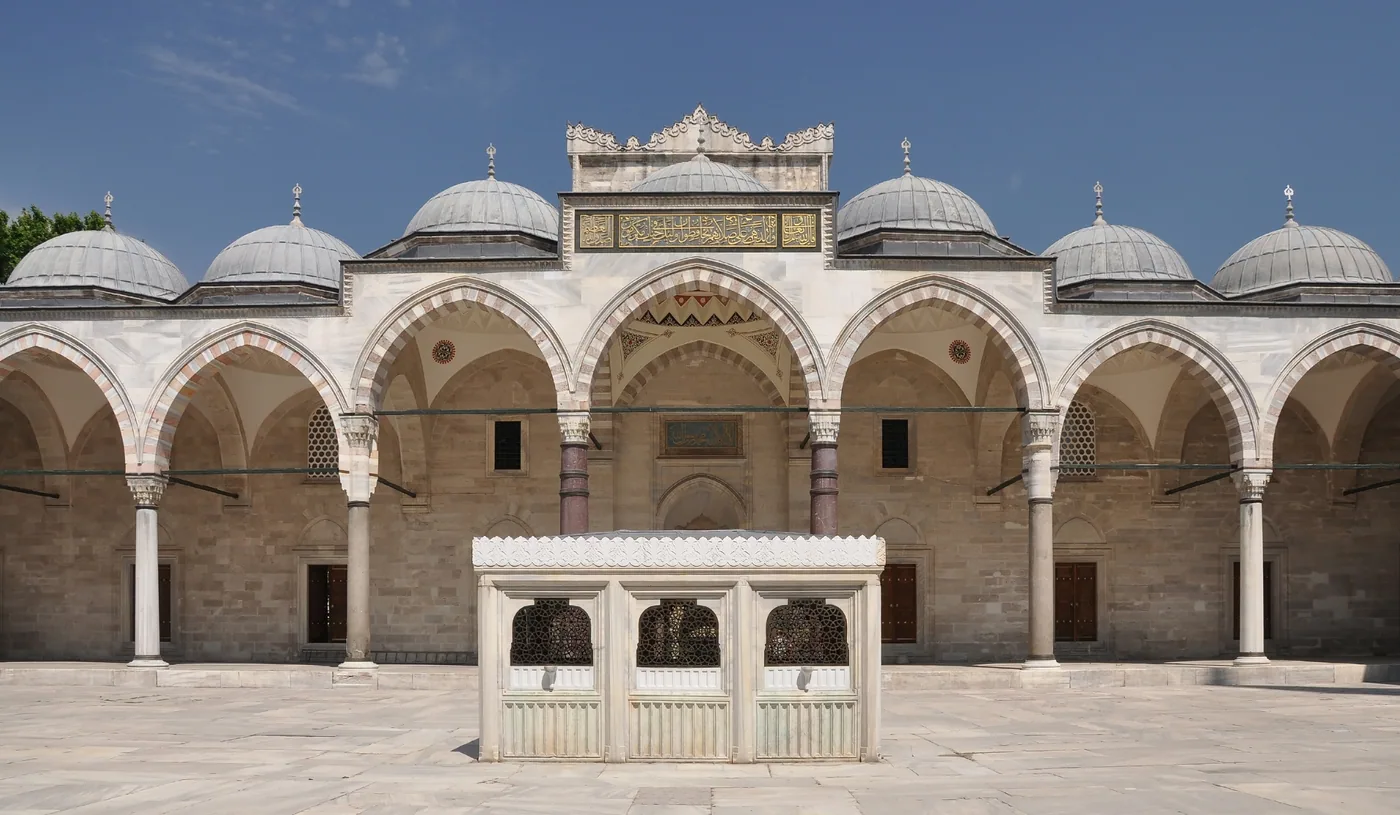
Şehzade Mosque is a rewarding addition if Süleymaniye leaves you wanting to understand more of Sinan’s work. Süleyman commissioned it in memory of his son Şehzade Mehmet, and construction ran from 1543 to 1548. The Fatih district’s account of the mosque describes the central dome and the four large half-domes around it. Look up at that arrangement, then step into the courtyard and notice how the smaller domes repeat around its edges.
This is a good place to slow down and look at one building properly. The fountain, decorated minarets and surrounding complex give you plenty to notice without needing a long checklist. The historic tombs are part of the story too, but access to a tomb and access to the mosque are not necessarily the same.
Find it at Şehzadebaşı Caddesi 70, in Kalenderhane, opposite the municipal headquarters. You can work it into a route through Beyazıt and Süleymaniye, rather than adding another journey across the city. It remains a place of worship: choose the visitor entrance, dress for a mosque visit and follow staff guidance around prayer. If sightseeing pauses for worship, enjoy the surrounding streets and return later.
3. Fener and Balat along the Golden Horn
Fener and Balat are a different side of Fatih: houses, schools, churches and the streets where daily life carries on between visitors. Their appeal is in looking closely, not in ticking off a list of colourful doors.
Take the T5 to Fener or Balat, decide whether you want a mostly level waterside walk or a climb into the backstreets, and leave time for a café stop. The large red building above Fener is a school, not the Ecumenical Patriarchate; confusing them can lead you up the wrong hill. Some religious buildings require specific visiting arrangements, so an exterior walking route is easier to keep flexible.
If you still have time, continue by tram towards Eyüpsultan. It is a more natural extension than rushing across town to an unrelated museum.
4. Fatih Mosque and a quieter look at the district
For a return visit, look around Fatih Mosque and its complex, then explore the surrounding streets at an unhurried pace. This is a chance to notice the courtyards, local food shops and everyday errands that disappear from a monuments-only itinerary.
The name “Fatih” can mean both the wider district and the area around this mosque. If you are meeting someone or taking a taxi, use the mosque’s full name or a precise street address. “Take me to Fatih” is much less useful than it sounds.
Getting in and moving between routes
The T1 tram serves Sultanahmet, Gülhane, Sirkeci, Eminönü and Beyazıt–Kapalıçarşı. The T5 runs along the Golden Horn through Fener and Balat. Marmaray at Sirkeci is useful when crossing from the Asian side.
Check your exact starting point rather than treating the closest-looking line on a map as the most convenient one. A station entrance, slope or busy road can make a difference with luggage or a pushchair. Our getting-around guide puts the main connections together.
Eating, resting and staying nearby
Give lunch a place in the route. Around the bazaars, walk a little beyond the busiest entrances and compare menus before sitting down. A simple meal can be just right when the afternoon includes a hill. Near a mosque, leave flexibility around prayer and follow the visitor entrance rather than joining the congregation’s route.
Sultanahmet suits monument-focused mornings; Sirkeci can be especially convenient for tram and rail connections. Neither name describes every hotel street equally well. Compare the places to stay with the route you actually want to walk, and save the other half of Fatih for a day when you can enjoy it properly.
Addresses & maps
Put it on your map
Süleymaniye Mosque
Süleymaniye MahallesiFatih, Istanbul
An uphill stop to combine with Beyazıt or a descent towards Eminönü.
Şehzade Mosque
Kalenderhane Mahallesi, Şehzadebaşı Caddesi 70Fatih, Istanbul
Use the mosque visitor entrance and leave room in your plan for prayer times.